


Most consultations start with a woman sitting across from me holding her bra strap in one hand and her phone in the other, saying she wants to look fuller but not obvious, natural but still noticeably different, and she wants to know what this is really going to cost in South Florida.
A patient in Delray Beach said almost exactly that not long ago. Two kids, volume loss after pregnancy, tired of stuffing swimsuits, tired of trying to decode implant sizes online. That’s a normal starting point. Not confusion because you have not done your homework, just too much bad homework from too many places.
At Inspire Aesthetics, Dr. Daniel Crane and our team spend a lot of time slowing that down. Cost, recovery, and size selection are connected. If you separate them, people make bad decisions.
What Drives Your Choice
Most women do not come in asking for an operation. They come in asking for a feeling. They want their clothes to fit again. They want symmetry. They want upper pole fullness that disappeared after weight loss or pregnancy. Sometimes they want proportion because their hips changed and their chest didn’t. That’s the real conversation.
And this is where people get tripped up.
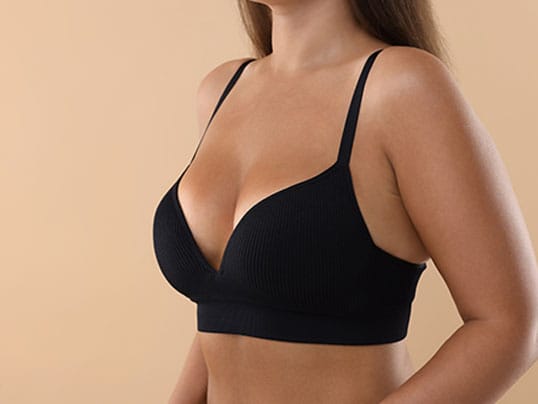
They start with a cup size. Cup size is a lousy planning tool. A D cup in one bra brand isn’t the same as a D cup in another. Your chest width matters.
Your skin quality matters. How far your breast footprint already extends on your chest matters. If your tissue is thin and you bring me a photo of someone with a wider frame, that photo isn’t a surgical plan. I will be blunt, it drives me crazy when patients show up with Instagram screenshots of women with completely different anatomy and expect a copy.
I take a hard line on this. I won’t promise a look your tissues can’t support safely. The cheapest mistake in a consult room becomes the most expensive mistake in an operating room.
One patient from Boca Raton came in wanting a dramatic jump because she had spent months looking at before-and-after photos online. Petite frame, narrow chest, stretched skin after breastfeeding. She kept repeating the number of cubic centimeters she saw in videos.
We stopped talking about cc for a minute and started talking about what her body could actually carry without rippling, bottoming out, or looking bolted on. She chose something smaller than she expected. Later, she told me it was the first consult where someone explained why “big enough” and “right for me” weren’t the same thing.
That’s the right starting point. Your goal, your anatomy, your tolerance for recovery, and whether you are trying to avoid a second surgery later.
Board certification matters here, not as a slogan but as a filter. Dr. Daniel Crane is certified by the American Board of Plastic Surgery and is a member of ASPS and ASAPS. Good. That tells you the surgeon trained for this work and meets standards. It doesn’t mean every size request gets approved. Some should be declined.
If you are also sorting through whether you need volume alone or volume plus a breast lift, read through our breast surgery page. A woman with nipple descent and loose lower pole skin can pick the perfect implant and still feel underwhelmed if the operation she really needed included a lift.
Numbers Behind the Price
In this market, pricing for breast augmentation in South Florida can vary considerably. That’s the useful framing. Not the ad you saw offering a low teaser price that leaves out anesthesia, facility fees, garments, or follow-up. Not the national average tossed around online as if Fort Lauderdale and rural markets are interchangeable.
A quote that seems unusually low in this market gets my attention, and not in a good way. Ask what is missing. Ask who is providing anesthesia. Ask whether the facility is accredited.
Ask what implant line is being used. Ask what happens if you need an after-hours evaluation. People hate asking these questions because they feel awkward. Ask them anyway.
We have seen this backfire. A patient who came to our team after surgery elsewhere thought she was saving money on the initial procedure. By the time she paid for breast implant revision, new imaging, extra recovery time from work, and the emotional cost of walking around unhappy with her chest for over a year, she had spent far more than a careful primary surgery would have cost in the first place.
Here’s what usually drives the final price in your area. Surgeon judgment is a big part of it, because experience isn’t free and should not be. Implant selection changes pricing. Facility fees matter. Anesthesia matters. If you are adding a lift, the number changes substantially because the operation is longer and the planning is more complex.
A quick story. A nurse practitioner from Delray Beach came in focused almost entirely on cost. Fair question. She had asymmetry and wanted to know why one office priced her case as a basic augmentation and another treated it as a more customized operation.
The answer was simple: one side needed a different strategy to balance the other. Matching breasts that never matched in the first place takes more than opening a box and placing two identical implants. Her quote wasn’t higher because someone was upselling her. It was higher because asymmetry is work.
And South Florida does carry a premium. Operating costs are higher. Demand is high. Patients also expect discreet, polished care. They should.
Financing can help, and there’s nothing wrong with using it responsibly. Just do not finance a bad plan. If you are comparing options, our financing information helps frame what the monthly reality looks like without pretending the procedure is somehow cheap.
Size Decisions
This is the part people obsess over, and for good reason. Size is the decision patients remember most vividly. They may forget the name of the implant profile. They do not forget feeling too small, too large, too artificial, or just not themselves after everything heals.
So how do you choose the right size? Not by cup letter. Not by your friend’s implant volume. Not by what looked good on a fitness influencer with a different rib cage, different soft tissue, and different priorities.
You start with your anatomy. Chest width gives me a boundary. Base width matters because an implant that is too wide crowds the chest and pushes tissue where it should not go. Soft tissue thickness matters because thin coverage raises the risk of visible rippling and edges.
Existing breast volume matters because the same implant looks completely different in a woman with a full B than in a woman starting nearly flat. Skin stretch matters. Tight tissue can make a moderate implant look rounder and more projected than expected. Loose skin can swallow volume and leave a patient saying, “Wait, that is it?”
Then there’s profile. Implants come in a range of profiles. That’s useful only if you know what problem you are solving.
A narrower implant with more projection can fit a small chest without spilling too wide. A broader implant with less projection may suit a wider chest and create softer fullness. The implant isn’t just a size. It is a shape decision.
And now the part patients usually appreciate once they see it in person: sizers and visual planning. You put on a bra, we test volumes, and we compare what your eye likes to what your tissues can support. That gap matters.
A lot. Some women are shocked by how modest the difference looks once the volume is inside a bra. Others realize the size they swore they wanted looks cartoonish on their own frame.
A patient from Palm Beach County came in saying she wanted “natural but definitely done.” That phrase covers half of South Florida. She was athletic, lean, and used to fitted clothing. Her first instinct was to go larger because she feared paying for surgery and ending up disappointed.
Very common. Once she tried sizers and saw where the implant sat on her chest, she backed down. Her concern shifted from “Will I be big enough?” to “Will this read fake in scrubs and workout tops?” Same patient, same day, different understanding.
Another patient, a schoolteacher, had the opposite problem. She kept choosing smaller options because she was nervous about looking obvious to coworkers.
Her anatomy could support more, and she had enough loose skin after pregnancies that a conservative implant would have left her underfilled. We talked through her clothing, her lifestyle, and what bothered her in the mirror, not what she thought sounded modest in the room. She went slightly larger than her first pick and later said it looked like the body she thought she had lost, not a new identity.
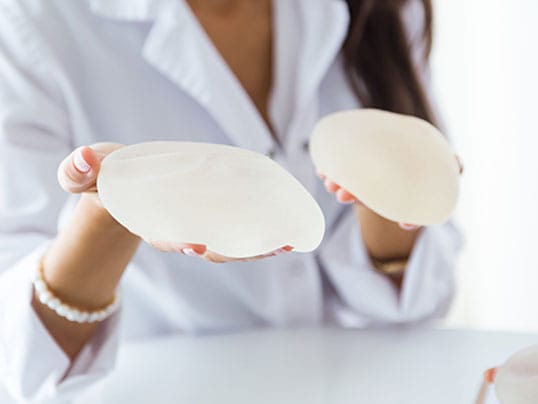
That’s a useful test. The right size often feels like restoration or proportion, not disguise.
This is also where implant technology can matter, but patients need plain English. Motiva breast implants, for example, are FDA-approved for augmentation and designed to behave differently depending on position — fuller in the lower breast when upright, rounder when lying back. That can appeal to women who want movement that feels less stiff. Technical details are useful, but they do not replace judgment. A premium implant in the wrong pocket is still the wrong surgery.
Then there’s the issue nobody wants to hear. Bigger isn’t more glamorous if your tissue can’t hold it over time.
Bigger can mean more stretching, thinner tissue coverage, earlier sagging, more visible implant edges, and a higher chance that you will be back in a consult room later asking about revision. Look, if your whole plan is “I can always fix it later,” that isn’t a plan. That’s borrowing trouble.
A woman from Broward County learned that the hard way after surgery elsewhere. She came to see us because her implants sat too low and too far apart. She had chosen size almost entirely from online photos and was told she would “adjust.”
She didn’t adjust. She adapted by wearing looser tops and hating beach days. Revision consults are sobering because they force honesty. The first operation may have been technically competent in a narrow sense, but the size choice ignored tissue limits.
You also need to decide how much upper fullness you actually want. South Florida patients often use the word natural, then point to photos with obvious upper pole roundness. That’s fine, but call it what it is.
A very natural slope and a visibly augmented cleavage line aren’t the same endpoint. One isn’t morally superior. They’re just different. The problem starts when the goal in your head and the language in the consult room do not match.
Short version. The right size is a match between anatomy, goals, and long-term stability. Not courage. Not trends. Not what your friend did.
If you are trying to sort out whether your issue is lost volume, descent, or both, our before and after gallery usually helps patients ask better questions. Not because someone else’s result should become your blueprint, but because it teaches your eye what different surgical plans actually do.
Life After Surgery
Recovery is usually more manageable than people fear, but more restrictive than they hope. Both are true.
Most women need help for the first couple of days. You will be sore, tight, swollen, and tired. The chest feels heavy. Reaching overhead isn’t fun.
Sleeping flat is usually miserable early on, so elevated rest helps. Swelling often peaks a few days in, which is the point where anxious messages tend to start. Normal. The surgery went well, then day three shows up, and everyone thinks something has gone wrong.
A patient from Delray Beach asked me if she could keep the surgery secret from her family by driving herself to follow up and acting normal the next day. No. This is outpatient surgery, not a haircut. Have help.
Most desk job patients can return fairly quickly if they are disciplined, though individual variation applies. Physical jobs take longer. Gym people hate this section, but chest loading too early is how you turn a smooth recovery into a mess.
Walking starts early. Strenuous exercise waits. Lifting restrictions are real. Knowing what to wear after a breast augmentation matters too — scar care takes consistency, especially in South Florida, where sun, sweat, and humidity aren’t doing you any favors.
And then suddenly a different issue. Heat.
If you live in your area and you recover as if you are hiding from the weather, you will do better. Stay cool. Keep incisions clean and dry.
Don’t decide that because the outside looks closed you are ready for saltwater, pools, or a long sweaty outdoor brunch in Delray Beach. I know that sounds absurdly specific. It is specific because we have watched people make exactly that call and then show up irritated, inflamed, and worried.
The shortest version is this: the first week is about protection, the next few weeks are about restraint, and the months after that are about patience. Implants settle. Tissue relaxes. Final shape isn’t judged overnight. Understanding how long breast augmentation lasts can also help set realistic expectations for the years ahead. If recovery planning stresses you out, our patient resources page covers the practical pieces patients forget, including garments and follow-up logistics.
Consult Room Essentials
Pick the surgeon before you pick the implant.
You want an American Board of Plastic Surgery-certified surgeon. You want someone who can explain why a recommendation fits your anatomy, not just nod along with whatever size you request.
You want an office that gives you clear post-op instructions and answers the phone when the swelling peaks in the middle of the night. Glamour in the lobby is irrelevant if the judgment is poor.
Bring photos, but bring them as vocabulary, not as demands. Tell us what you like in those photos. More cleavage. Softer slope. Better balance in clothing. That helps. “Make me look exactly like this” doesn’t.
Who is doing the surgery, and who is doing the anesthesia? What happens if I need a lift and not just implants? If I call worried overnight, who calls me back? Why is this quote lower, or higher, than another office, and is that because of implants, facility time, or because somebody forgot to include the surgical bra nobody can stand wearing?
That last one sounds petty until you are paying out of pocket for all the extras one office forgot to mention.
And yes, personality matters. Honest education and realistic expectations aren’t soft values. They’re safety tools.
Frequently Asked Questions
How much does breast augmentation actually cost in South Florida, all-in?
A complete breast augmentation in South Florida typically includes surgeon fees, anesthesia, facility fees, implants, post-op garments, and follow-up visits — and any quote missing those line items is not a real number. When you see unusually low pricing in this market, ask specifically what is excluded before you compare it to anything else. The total investment reflects the full case, not just the surgeon’s fee in isolation.
How do I choose the right implant size without going too big or too small?
Cup size is not a surgical measurement, and using it as your planning tool is one of the most common ways patients end up unhappy. Your chest width, skin quality, and existing breast footprint determine what your body can actually carry without rippling, bottoming out, or looking disproportionate. The right size is the one your anatomy can support long-term, not the largest number you saw in a video.
How long does recovery from breast augmentation take in South Florida?
Most patients return to desk work within a week and resume light activity within two to three weeks, but full recovery, including unrestricted exercise and final settling of implants, takes closer to six to eight weeks. South Florida’s active lifestyle — swimming, fitness classes, beach activity — means you need to plan that window honestly before scheduling. Rushing recovery is one of the fastest ways to create a complication that extends your timeline further.
Do I need a breast lift along with implants, or will implants alone give me the results I want?
If your nipples sit below your breast crease or you have significant loose skin in the lower pole, an implant alone will fill a deflated shape rather than correct it. Adding volume to tissue that has already descended often leaves patients underwhelmed, even with the right implant size. A lift repositions the nipple and reshapes the breast; the implant adds volume — and combining them is a longer, more complex procedure that changes both the surgical plan and the cost.
Why does board certification matter when choosing a breast augmentation surgeon in South Florida?
Dr. Daniel Crane is board-certified by the American Board of Plastic Surgery. This means your surgeon has completed a full plastic surgery residency and passed rigorous written and oral examinations specific to this work. It also means they are held to ongoing standards, not just a credential earned once and forgotten. In a market with many providers offering cosmetic procedures, that distinction tells you whether the person operating on you trained specifically for this surgery or simply acquired the equipment.

Written by: Dr. Daniel Crane
Board-Certified Plastic Surgeon, Inspire Aesthetics
About Dr. Crane